
Confronting My Grime Bias

I’ll admit it: a few years ago, I was biased against grime music. In my mind, it was just abrasive noise about drugs and violence – something I’d only hear blaring from modded car speakers or on the news in stories about “youth trouble.” Whenever grime popped up, I’d roll my eyes and think: here we go, more glorification of gangs. The media had painted grime as dangerous and anti-social, so I took that at face value. I remember headlines linking grime to street crime and even the London riots, fueling the stereotype of grime as “dark, dangerous and intimidating”. Back then, I genuinely thought grime offered nothing of substance beyond aggression.
But I was wrong. As I started actually listening – really listening – my perspective flipped. The more grime tracks I heard, the more I grasped the deeper stories woven into those rapid-fire lyrics. I began to hear pain, pride, struggle, and hope – the authentic voice of a generation, not just brags about “straps” and “shotting.” This personal journey from skepticism to appreciation opened my eyes not only to the music itself, but also to the unfair stigma grime has battled from day one and how that’s slowly changing.

Stormzy is hailed as one of today’s biggest stars of grime music
Origins in East London’s Underground
Grime was born in the early 2000’s in East London, and understanding that DNA helped me understand the music. It emerged from the ashes of UK garage and jungle, forged by kids on inner-city estates who craved a sound of their own. I picture early grime as a bunch of teenage MCs in a cramped tower block room, hungry to spit lyrics over gritty, 140 BPM breakbeats that mirrored their reality (wikipedia). The community roots of grime run deep – it was less a commercial genre than a local movement of young, largely Black British Londoners, making music in DIY spaces like youth clubs and pirate radio.
Pirate radio was everything for grime’s genesis. Mainstream stations weren’t exactly putting on raw 18-year-old MCs from Bow or Peckham, so the scene built its own radio network. Crews set up illegal transmitters on tower block rooftops, broadcasting sets on stations like Rinse FM and Deja Vu to any kid who’d tune their FM dial just right.
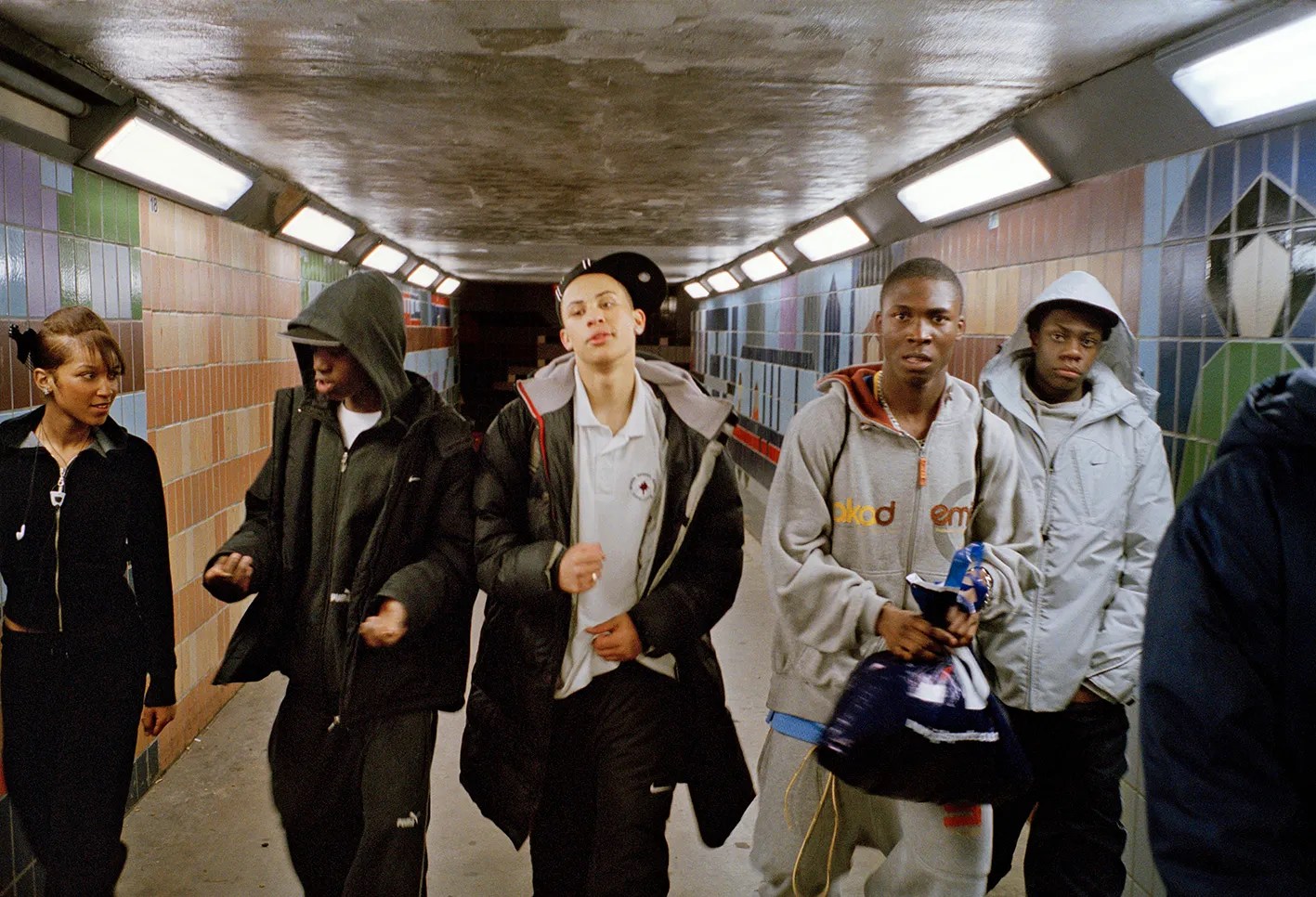
As Lewisham MC Novelist later explained, “legal radio wants to censor everything… That’s why grime is what it is now – pirate radio… made all the MCs how they are. Pirate is the playground for all that.” In those crackly early broadcasts, MCs could be themselves, wild and unfiltered, honing the lightning-fast flows and inventive rhymes that define grime.
Early grime spread hand-to-hand and online. Kids swapped homemade mixtapes and DVDS of freestyle battles. (Anyone remember the Lord of the Mics clash videos? Classic.) Channel U, a low-budget TV station, started playing grime videos in 2003 and gave many artists their first exposure.
On the internet, forums like the RWD Magazine forum allowed fans and artists to connect directly – in fact, future stars like Wiley, Skepta, and Jme would hop on those forums to engage with listeners in the early 2000s. This was all before YouTube and social media took off. Grime was going viral the analogue way: through pirate radio static, burnt CDs, MSN Messenger file transfers, and any outlet it could find.
It’s no surprise, then, that grime initially confused outsiders. It didn’t fit neatly into existing genre boxes. In 2004, grime’s godfather Wiley even released a tongue-in-cheek track called “Wot Do U Call It?” basically asking, what do you call this new sound? In the song, Wiley mocks people trying to label his music as mere garage and jokingly calls it “Eski beat” instead (jacobin). Eventually the name “grime” stuck, partly because journalists and DJs kept using it. At first I didn’t realize how self-aware grime’s pioeers were – even the genre’s name began as a sort of shrug, a defiant “call it whatever you want, we’re doing our thing.”
The Street Reality Behind the Lyrics
One turning point in my view was actually listening to what MCs were saying, not just how fast they said it. Yes, grime beats are hard and the delivery aggressive – that’s the energy of it. But inside those bars are real lived experiences. Grime began as “the sound of an angry but optimistic Black Britain… the voice of hope”, coming from council estates and forgotten neighborhoods. It’s music by and for kids who felt unheard in wider society. The more I listened, the more I heard that grime is storytelling.
Take veteran East London MC Bruza. One of his tracks, “Doin’ Me,” isn’t about crime at all – it’s a reflective piece about identity. It was described as a “cultural timestamp” of what it means to navigate life as Black and British. Grime lyrics often paint visceral vignettes of everyday struggle: the boredom of unemployed youth, the temptations of the streets, but also the camaraderie and creativity that bloom in those conditions. Dizzee Rascal’s early track “Sittin’ Here” literally has him sitting on a bench in his estate, observing life – it’s introspective poetry from a teenager in Bow. Kano would rap about the push-and-pull of trying to make it out. Even the more braggadocious tunes had clever wordplay and local slang that, once decoded, reveal humor and resilience in the face of hardship.
I started to appreciate that when an MC talks about violence or selling drugs, often they’re describing a reality rather than promoting it. It’s reportage from their world – a raw form of musical ethnography. In a sense, grime MCs were doing the job of journalists, documenting what life was like in the forgotten corners of London. As one academic observer noted, grime’s gritty lyrics are “stories of urban life” riding on “aggressive basslines and fast-paced rhythms”, the soundtrack for youth on council estates. Once this clicked for me, I could no longer dismiss grime as mindless – it was unfiltered truth set to a beat.

Backlash and the “Dangerous” Label
For years, however, that truth was lost on much of the British media. As grime grew in the mid-2000s, it met with immediate pushback and paranoia. I remember how any scuffle at a grime rave would get splashed in the news as evidence that the genre itself was to blame. A prime example was Lethal Bizzle’s anthem “Pow (Forward)”. The track was so hype that it allegedly sparked fights in clubs, and it scared authorities senseless. Many venues banned “Pow” outright; Bizzle said he couldn’t perform in “urban” clubs for over a year (wikipedia). Imagine – a song effectively blacklisted from nightlife.
By 2005, the Metropolitan Police introduced Form 696, a so-called “risk assessment” form that promoters had to submit for events. In theory it was to curb violence, but in practice it was used to shut down grime nights. The form infamously asked what ethnic groups were likely to attend, which tells you all you need to know. It was blatant racial profiling, thinly veiled as paperwork. A Conservative MP even slammed Form 696 as “draconian”. Grime artists saw it for what it was: a targeted attempt to smother a Black British art form. “They [police] target grime a lot, they just blame a lot of things on grime… they’re just trying to shut it down,” said MC P Money, after police intel got him pulled from festival line-ups. The grime community widely felt that authorities were scapegoating the music for social problems – transferring blame for violence from the social conditions to “the music describing them”.
Looking back, the double standards were stark. When rock or punk gigs got rowdy, it was “rock’n’roll behavior” – you didn’t see police requiring Oasis to fill out ethnicity questionnaires for their concerts. Football matches regularly had hooligan brawls, yet no one suggested banning football. But a grime rave? Suddenly music itself was the problem. It was hard not to feel that grime was demonized not just because of its edgy sound, but because of who was behind it: young Black Britons from council estates. The press often latched onto this. Grime was frequently described with buzzwords like “threat”, “gang-related”, “violent lyrics,” whereas equally rebellious genres dominated by white artists weren’t policed as heavily. Media narratives amplified the fear. I recall early articles fretting if grime was “Inciting violence” or pundits conflating grime with criminal gangs. This climate led to real censorship – countless shows were shut down, tours cancelled. One early grime collective, So Solid Crew, had a 2001 tour and even a 2002 festival appearance axed after police refused to work security (jacobin). Years later, other artists like Giggs and J Hus faced similar roadblocks in staging shows. Grime became a convenient bogeyman for broader issues of youth violence.

So Solid Crew were pioneers of the grime sound
At the time, I took all this at face value and thought, “Well, if the police are shutting these events, the music must be trouble.” Now I see it differently. The establishment’s response to grime was out of proportion because grime was an easy target. It was easier to blame the music and the predominantly Black youth behind it than to address the poverty, lack of opportunities, and disenfranchisement that the music spoke about. In a way, grime held up a mirror to society’s failings, and some folks didn’t like what they saw. So they tried to shatter the mirror.
Changing the Narrative
Fast forward to the 2010s – grime refused to die. Despite the crackdowns, the scene kept breathing in the underground, waiting for its moment. And then that moment came, smack in the middle of my skeptical phase. Suddenly I couldn’t avoid grime’s second wind: it was everywhere, and bigger than ever. Skepta was leading the charge; his 2015 banger “Shutdown” became a rallying cry. The song’s title said it all – grime was here to shut down all the nonsense stereotypes. In “Shutdown,” Skepta even samples a posh-sounding TV viewer’s complaint about his crew’s performance at the Brit Awards (when Kanye West invited UK grime MCs onstage). The aghast viewer calls the spectacle “aggressive” and “not what I expected to see on prime-time TV”. Skepta flipped that criticism on its head, turning it into an intro skit celebrating how grime had crashed the establishment’s party. I remember hearing that and smirking – the irony was delicious. Grime wasn’t apologising for making folks uncomfortable; it was rubbing it in with a grin.
The big turning point for grime’s public perception was its mainstream recognition. When Skepta’s album “Konnichiwa” won the 2016 Mercury Prize (the UK’s top music award), I was stunned – in a good way. Here was an uncompromising grime record, full of gritty beats and slang, being lauded as the best album in the country. Skepta beat out pop stars and even David Bowie for that prize. It felt like validation not just for him but for the whole genre. Media outlets suddenly had to mention grime in a positive light. That Mercury win “introduced grime to a new generation of fans” and proved this music could no longer be ignored.

‘Konnichiwa’ by Skepta won the 2016 Mercury Music Prize, a breakthrough for the genre
If Skepta kicked the door open, Stormzy blew the roof off. In 2019, Stormzy became the first grime artist to headline Glastonbury Festival, the biggest music festival in Britain. Let that sink in – the same grime once maligned as a public nuisance was now front-and-center on the prestigious Pyramid Stage, broadcast live on the BBC to millions. And Stormzy made it count: he performed in a stab-proof vest graffitied with a Union Jack, a piece of art designed by Banksy to highlight youth violence and racial inequality. The image was powerful – a young Black man in body armor under the UK flag, spitting lyrics on the grandest stage. It was a statement that grime had arrived. Watching from home, I had goosebumps. Stormzy even led the massive crowd in singing lyrics that bashed politicians and championed his culture. It was raw, it was unapologetic – it was grime, on its own terms, commanding respect.
Around the same time, more positive milestones rolled in. Grime artists started getting honored for their contributions. A great example is Lady Leshurr, the razor-tongued MC known for her viral freestyles. In 2020 she was awarded the British Empire Medal by the Queen, officially recognizing her services to music and charity. Think about that: a genre that a decade prior was seen as a scourge was now literally getting royal honors! Lady Leshurr herself admitted she almost deleted the award email, thinking it was spam. It’s a sign of how far grime has come in shedding its pariah status.
And grime’s influence kept expanding. Artists like Wiley, long dubbed the “Godfather of Grime,” finally started to get their due props (Wiley even earned an MBE, though he controversially rejected it). Academic and press interest grew too – books like This Is Grime (by Hattie Collins and Olivia Rose) documented the scene’s history and cultural impact in detail, treating grime as the important movement it is. As that book’s intro powerfully put it: “It was dark… loud… unapologetic… the brittle sound of disillusionment… but also the voice of hope. It was grime.” Mainstream media began acknowledging that grime gave a voice to a generation that had been talked about but seldom listened to. Even the police eventually scrapped the hated Form 696 by 2017, admitting perhaps that it had unfairly stifled live music.
By the late 2010s, I found myself actively rooting for grime. The same music I once dismissed had now soundtracked some of Britain’s biggest cultural moments. And in the process, it forced a lot of people – myself included – to confront our own prejudices.
Grime’s Growing Pains and Triumphs
Grime’s journey hasn’t been without challenges. It remains an outspoken, defiant culture, and that can still ruffle feathers. But the narrative has undoubtedly shifted. No longer is grime only mentioned in the press as a problem; now it’s recognized as a creative force driving fashion, slang, and even political discourse. (Fun fact: in the 2017 UK election, numerous grime MCs spearheaded a “Grime4Corbyn” campaign encouraging youth to vote – who saw that coming?). Grime has also grown more inclusive over time. In the early days, it’s true that the scene was very male-dominated – one of grime’s anthems was literally called “Too Many Man” complaining about not enough girls at raves. But that too is changing. Today we see more women blazing their own trail in grime, from MCs like Lioness and Nolay to producers and DJs. There are amazing grassroots projects highlighting this shift, like photographer Ellie Ramsden’s book “Too Many Man: Women of Grime,” which documents and celebrates the women who have been part of the scene from the start (often behind the decks or cameras, if not always on the mic). Grime is broadening, evolving, and finding longevity by bringing new voices to the forefront.
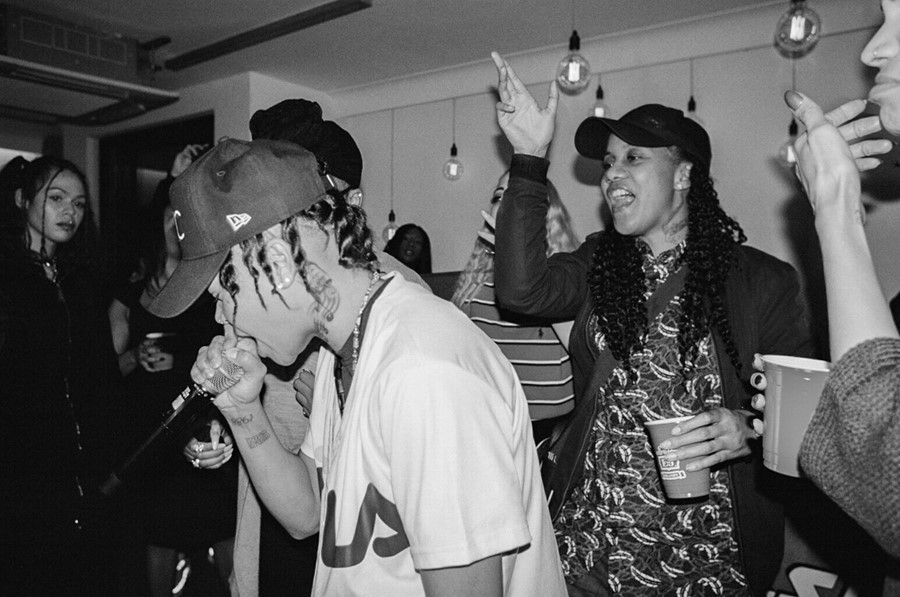
‘Too Many Men: Women of Grime’ details the struggle for women to be seen in the grime scene
Crucially, grime never lost its community spirit. Despite mainstream success, the scene still thrives on collaboration and mutual support. Older MCs mentor younger ones; big stars still hop on underground sets; fans still pack small club nights to see a surprise set from a legend. That sense of “we’re all in this together” that built grime in East London pirate studios remains its lifeblood. I’ve come to really respect that loyalty and passion.
Listening with an Open Mind
Reflecting on my journey with grime, I feel a bit sheepish about my initial ignorance – but also grateful that grime’s artists were patient teachers through their music. They didn’t know they were teaching me, of course, but by staying true to their stories, they challenged me to drop my assumptions and just listen. What I found was a genre as complex and rich as any other: one that can go from fiercely political to downright hilarious (grime does braggadocio and banter like no other) in the space of a 16-bar verse.
The stigma that grime faced was never really about the music itself – it was about fear of the unknown and, frankly, fear of a marginalized youth culture seizing its voice. Once grime’s authenticity cut through, many of those walls came down. It’s poetic that the very things that made grime seem threatening at first – its raw honesty and loud refusal to be polite – are what make it so important and beloved now. Grime proved it didn’t have to tone itself down to be heard; instead, the world learned to turn the volume up.
Today, grime is still growing, branching into subgenres and influencing new artists (even internationally – you can find Japanese and Australian MCs spitting grime flows now!). It continues to be, at its core, the voice of real life for many – the ups, downs, and everything in between. And it’s taught me the value of listening with an open mind and open ears. Had I stayed stuck in my bias, I would’ve missed out on the artistry of a whole cultural movement.
Grime’s story isn’t finished, but one thing’s clear: it’s come a long way from the pirate radio basements where it began, and it’s here to stay. I’m genuinely excited to see what the next chapter holds. If the past is any hint, grime will keep pushing boundaries and speaking truth, whether or not everyone’s ready to hear it. And as for me – I’ll be listening, loud and clear.
If you wish to have a listen for yourself, check out this curated playlist on Spotify that covers a lot of the hot faves in the Grime music scene.
Sources: The facts and quotes in this article are supported by sources including artist interviews, academic works, and music journalism – for example, Wiley’s take on naming grime
jacobin.com, Skepta’s use of a Brit Awards complaint in “Shutdown”
gigwise.com, Bruza’s reflections on being Black and British in grime
hungermag.com, and historical accounts of media and police backlash
jacobin.com. Key cultural moments like Skepta’s Mercury Prize
en.wikipedia.org, Stormzy’s Glastonbury set
en.wikipedia.org, and Lady Leshurr’s BEM honor
imdb.comunderscore how far grime has come. Community initiatives such as Ellie Ramsden’s Too Many Man: Women of Grime project highlight the genre’s ongoing evolution and inclusivity
dazeddigital.com. Grime’s journey from stigmatized “noise” to celebrated art form has been well documented in sources like This Is Grime
theguardian.com, and stands as a testament to the power of listening beyond our preconceptions.
 Studio DJC