
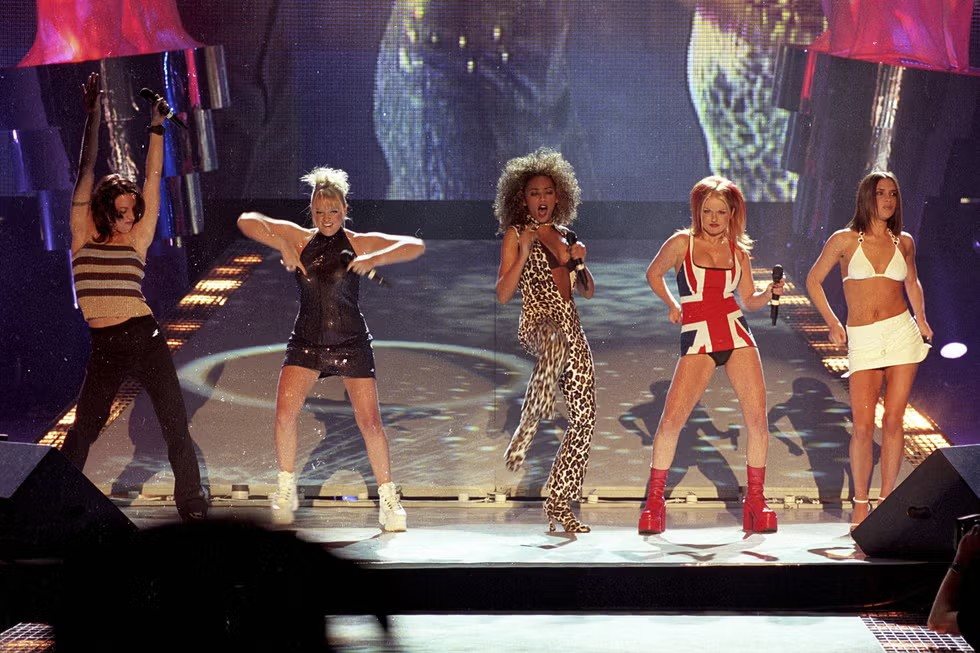
February 1997, London. The Spice Girls are onstage at the BRIT Awards, and all eyes are on Geri “Ginger Spice” Halliwell. In a flash, Geri appears with her bandmates, revealing a bold Union Jack mini-dress, instantly sending the crowd (and the press) into a frenzy. Little did she know, this DIY-modified outfit – essentially a British flag tea-towel stitched onto a Gucci mini – would become one of pop culture’s most defining images of the ’90s. The next day, photos of Geri in that dress splashed across front pages worldwide, cementing a moment that symbolized an era of Britpop swagger and “Girl Power”. This is the story of the Union Jack dress: its cheeky origin, its explosion into a Cool Britannia emblem, and how it came to represent a generation’s brand of feminism and fun.
Before we begin — let’s remind ourselves of that moment in time.
A Flag-Waving Moment at the BRITs
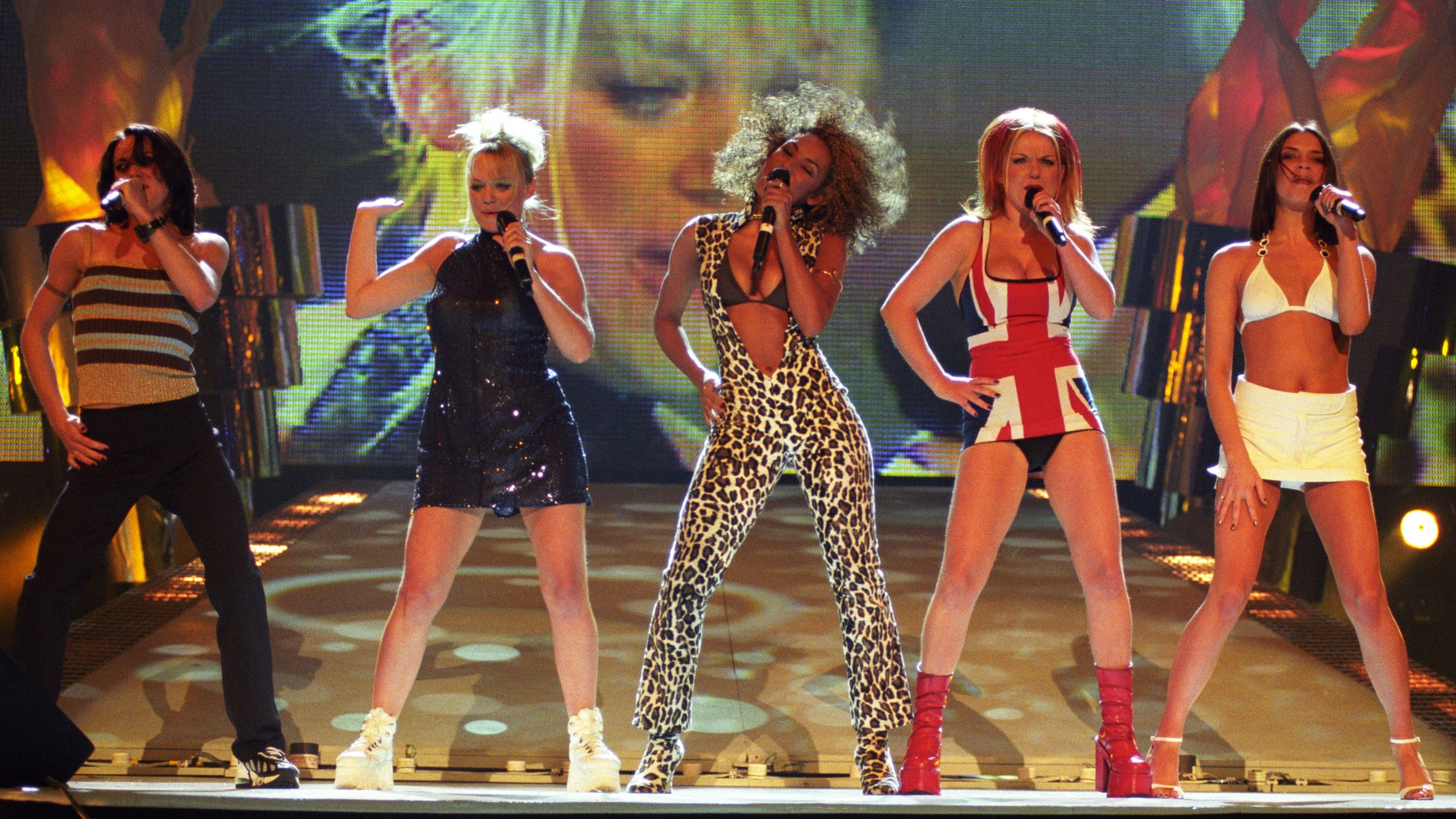
When Geri Halliwell stepped out in her Union Jack dress at the 1997 BRIT Awards, it wasn’t just another pop performance – it was a pop culture earthquake. The Spice Girls were at the peak of their powers, opening the awards show with their hit medley, but it was Geri’s outfit that stole the show. As Geri later admitted, she had an “aha” moment before the event: “I remember thinking, ‘It’s the Brits—British flag!’” . Embracing that patriotic idea, she transformed her plain black dress into a statement. During the performance of ‘Wannabe’/’Who Do You Think You Are’, Geri high-kicked and strutted in the flag mini-dress and red platform boots, literally wrapping herself in the Union Jack. The audience went wild – and so did the media. “I woke up the next morning, and that picture of me in the dress was on the front page of every newspaper,” Geri recalled, still amazed at the reaction . It became an instant cultural icon – an image that shouted pride, rebellion, and charisma all at once. As Geri put it, “That dress really became the identity of what Girl Power stood for.”
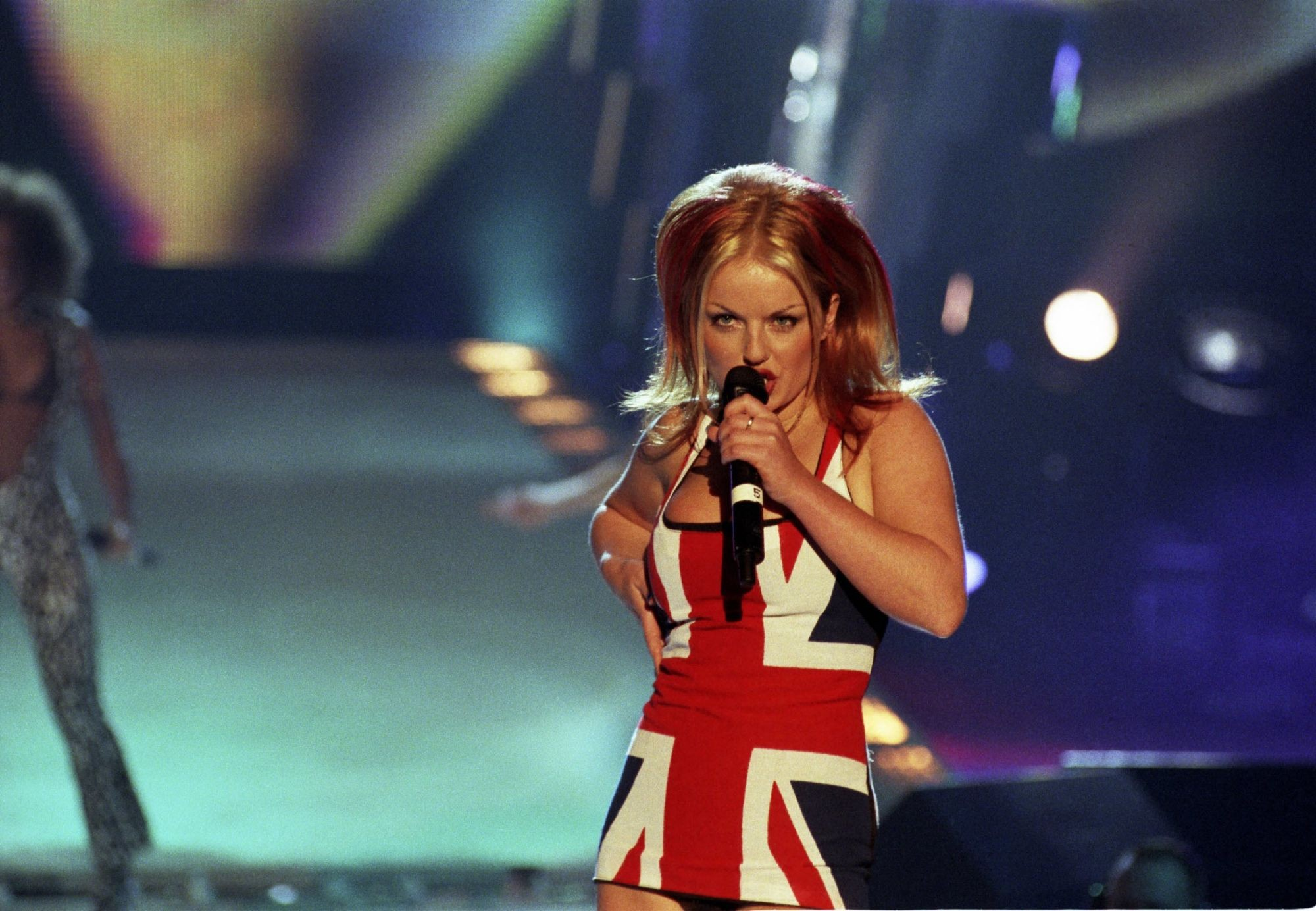
Halliwell performing in a glittering Union Jack mini-dress, an outfit that would become one of the 1990s’ most iconic pop culture moments.
Indeed, the Union Jack dress quickly turned into shorthand for the Spice Girls themselves. The look was so impactful that it “joined the elite list…of pop looks so iconic that even the very worst fancy dress efforts are instantly recognisable,” as one writer quipped . In the years that followed, everyone from drag queens to school talent show contestants donned knock-off Union Jack minis in homage. “It’s the dress that launched a thousand drag acts and school talent show routines, the dress that was copied and flogged on market stalls across the land,” The Independent later noted, highlighting how ubiquitous the look became . Geri’s flashy patriotic frock was more than a one-night wonder – it was a cultural phenomenon.
DIY Spice: From Gucci Gown to Tea-Towel Triumph
The most astonishing part of this legendary fashion moment is how homemade it was. Far from a couture creation, Geri’s Union Jack dress had humble beginnings. The Spice Girls’ stylist had given her a sleek black Gucci mini-dress to wear for the BRITs performance, but Geri felt it lacked the spark she wanted. In her typical fearless style, she took matters into her own hands – literally. “Unconvinced the dress was special enough,” she had a sudden inspiration to celebrate Britain proudly on stage . Geri rummaged through her things and found a Union Jack tea towel. With the help of her sister Natalie and some sewing needles, they stitched the red, white, and blue towel onto the front of the little black dress the night before the show .
This spur-of-the-moment DIY alteration could have ended in disaster – even the Gucci team reportedly declined to make such a risky change – but Geri’s intuition proved spot on. She even added a last-minute touch on the back: a large white peace sign patch. A stylist had warned that a bold Union Jack might carry uncomfortable nationalist overtones (the Union Flag had been used by the far-right National Front), so Geri countered that by literally sewing on a message of unity. “I remember showing [the dress] to a stylist and she said to me, ‘You can’t wear that – it’s National Front…’ I said, ‘No, stop—we celebrate all cultures.’ And that’s why I put the peace sign on the back,” Geri explained . In one cheeky move, she turned a potential controversy into a symbol of inclusivity.
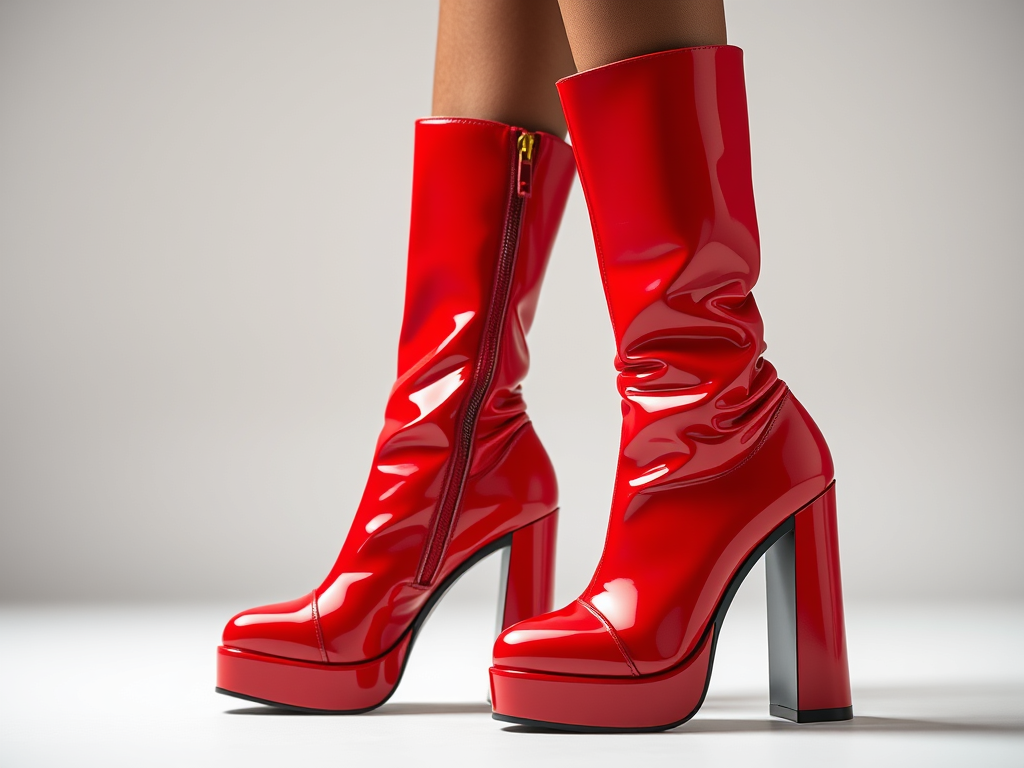
Everything about the outfit was personal to Geri. Even her bright red platform boots were an exercise in DIY flair – she spray-painted an old pair of go-go boots with car paint from her dad’s garage to get the perfect matching shade . Geri later joked she’s “always been a secret fashion designer,” and in this case her off-the-cuff design became legendary . The end result was a look that was unapologetically fun, patriotic, and a little bit punk in spirit – a true product of Geri’s own creativity and courage to follow her gut. “Trust yourself… this dress is a reminder to follow your instincts and be yourself,” Halliwell reflected years later, remembering how she stuck to her vision despite doubts . That confidence paid off more than she could have imagined.
Cool Britannia on Full Display
It’s impossible to separate Geri’s Union Jack dress from the wider “Cool Britannia” climate of the late ’90s. This was the era of Britpop bands, Tony Blair’s fresh-faced government, and a resurgence of British cultural pride. The Union Jack itself was suddenly cool again – not in a jingoistic way, but as a pop art motif signaling youthful energy. Geri Halliwell’s BRITs dress became the defining fashion moment of Cool Britannia, capturing the optimistic, cheeky spirit of 1997 Britain . Here was a proud British flag worn not by a politician or a monarch, but by a fiery young woman in a pop group championing girl power. It felt both rebellious and celebratory.
Geri wasn’t the only one flying the flag either. Around the same time, supermodels Kate Moss and Naomi Campbell strutted in Union Jack designs on runways, Oasis frontman Liam Gallagher posed on a Union Jack bedspread for a Vanity Fair cover (headline: “London Swings! Again!”), and British bands were ruling the charts. But no image was as globally famous as Ginger Spice in her flag mini-dress. The outfit neatly encapsulated the moment the UK was having: a “vibe shift” that harkened back to the Swinging Sixties yet looked forward to a bright, modern, inclusive future . As one commentary put it, the Spice Girls and their contemporaries brought a kind of energy and optimism it’s “hard to fathom in UK politics today.” The Union Jack dress became a fashion symbol of national pride that didn’t take itself too seriously. It said: here is a new Britain – playful, diverse, confident – and Geri wore that message literally on her body.
Crucially, Halliwell’s use of the flag was inclusive and tongue-in-cheek. By planting a peace symbol on the back, she made clear this was about unity and fun, not divisive nationalism. “We celebrate all cultures,” she insisted, rejecting any narrow interpretation of the Union Jack . In 1997, that felt fresh and exciting. (It’s notable that years later, in a more polarized, post-Brexit Britain, some viewed the flag differently – but back then, Geri’s flag dress read as joyful and unifying, not political. It was Cool Britannia at its coolest.) And of course, it didn’t hurt that the Spice Girls were an ethnically diverse, gender-positive group of friends, embodying a modern multicultural Britain. The dress symbolized British pop patriotism – proud but a bit irreverent – perfectly in tune with the times.
Girl Power: Feminism Woven in Fashion
Beyond patriotism, the Union Jack dress resonated so strongly because it screamed “Girl Power!” to millions of young women. The Spice Girls famously championed a feisty, fun brand of feminism, and Geri’s daring outfit was a banner (literally) for that cause. In the ’90s, feminism found a new expression through pop culture, and the Spice Girls led the charge with their empowering motto and outrageous style. Halliwell’s dress managed to be sexy and strong at the same time – a balance that was key to the Spice Girls’ appeal. As one pop culture commentator noted, “the Spice Girls’ wardrobe – sexy, sure, but also winkingly playful, camp, often verging on the cartoonish – was always a part of their feminism” . In other words, they used fashion to celebrate femininity and fun, while subverting expectations. Geri’s skimpy Union Jack mini was paired with chunky boots and a confident attitude, turning a potentially objectifying look into one that felt powerful. “Skimpy hemlines and Wonderbras were counterbalanced by tracksuit bottoms and clodhopping boots; every concession to the… male gaze [was] subverted by mouthy sloganeering,” one retrospective observed, “and the Union Jack dress ticked both boxes.” It was at once playful and provocative – feminine but not made to please anyone but the wearer.
Ginger Spice herself described the outfit’s meaning in terms of empowerment. “The length of the dress is the sexuality, and the big … boots are saying, ‘You’re not going to mess with me,’” Geri explained of her look . She deliberately mixed sexy and strong elements – a micro-minidress and bold red platform boots – to convey confidence. This sartorial strategy sent a message to girls everywhere: you can dress up for yourself and still kick butt. The Union Jack dress became a visual shorthand for the Spice Girls’ Girl Power ethos – a bright, unapologetically feminine style that carried an undercurrent of strength and self-possession. As Geri said later, the dress came to embody what their brand of girl power stood for . It’s no wonder that for years, young women wore their own versions of the outfit to parties and concerts, channeling a bit of Ginger Spice’s fearless energy. Geri had created not just a look, but a moment in feminist pop culture – empowering a generation to have fun with fashion and own their power at the same time.
Importantly, the Spice Girls made feminism feel approachable and exciting for a younger audience. They weren’t lecturing or dour; they were laughing, high-kicking, and taking over the world in platform boots. Geri’s flag dress encapsulated that vibe in one image – a woman literally wearing her identity with pride, daring anyone to tell her off. As the group’s unofficial figurehead, Halliwell often pushed the girl power message loudest, and that night at the BRITs she basically wore the slogan. Girls ruled (and, as a popular Spice Girls poster cheekily finished, boys drooled). The dress today is enshrined in feminist pop history, often cited as an example of 90s “pop feminism” making a real cultural impact. Not every critic was convinced at the time – some wondered if Girl Power was more slogan than substance – but there’s no denying the symbolic punch of that outfit. Decades later, it’s remembered not just for its style but for its statement: that any girl could seize the spotlight, proudly, on her own terms.
From Stage Sensation to Auction Record
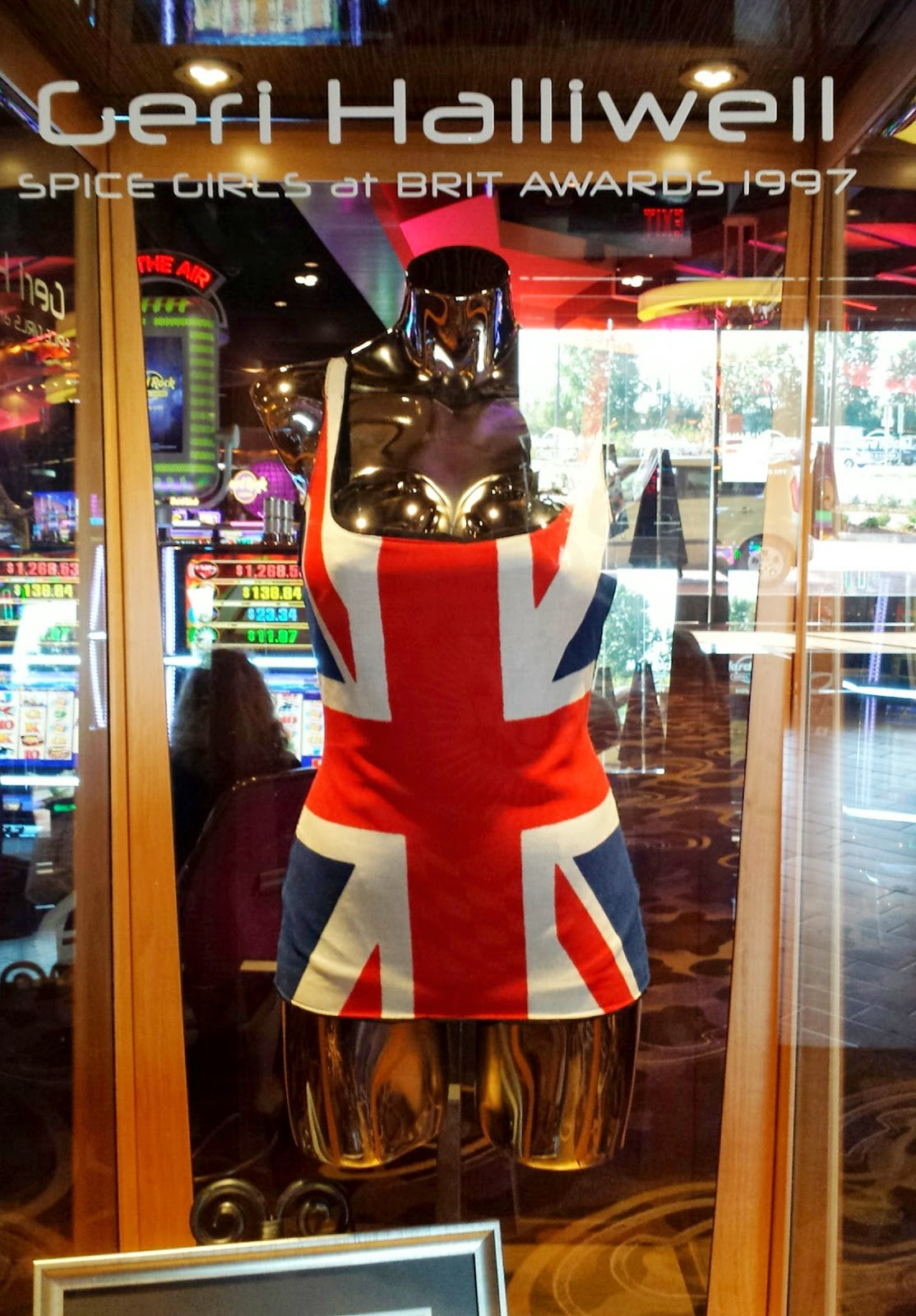
After the BRIT Awards, the Union Jack dress’ legend only grew. The Spice Girls continued to ride their wave of success, and Geri kept the famous frock safe for a while. But in 1998, a year after that performance – and notably, not long before Halliwell would leave the Spice Girls – she decided to part with the dress. Geri put her prized outfit up for auction, with proceeds going to charity, and the sale became a media event of its own. Bidders lined up for a piece of pop history. The little flag dress that cost maybe £5 to make (not counting the Gucci base) ended up fetching a whopping £41,320 at a Sotheby’s auction in London . That was equivalent to around $70,000 USD at the time, setting a Guinness World Record for the most expensive piece of pop star clothing ever sold . The winning bid came from Peter Morton of the Hard Rock Hotel & Casino in Las Vegas, meaning the dress went from the BRITs stage to a glass display case as prized memorabilia . (To this day, you can see the original Union Jack dress exhibited at Hard Rock in Vegas, a shrine for Spice Girls fans and the curious alike.)
As the gavel fell at the auction, it felt like the end of an era. Even the BBC noted that Geri selling her signature costume “marks the end of Geri’s links with the Girl Power image of the past.” It was September 1998, and indeed Halliwell had just departed the Spice Girls, signaling a close to the first, explosive chapter of Spice mania. Letting go of the dress was a symbolic goodbye to Ginger Spice as the world knew her. Geri was moving on – shortly embarking on a solo career – and auctioning off the Union Jack frock was like retiring a jersey. But the legend of the dress was far from over.
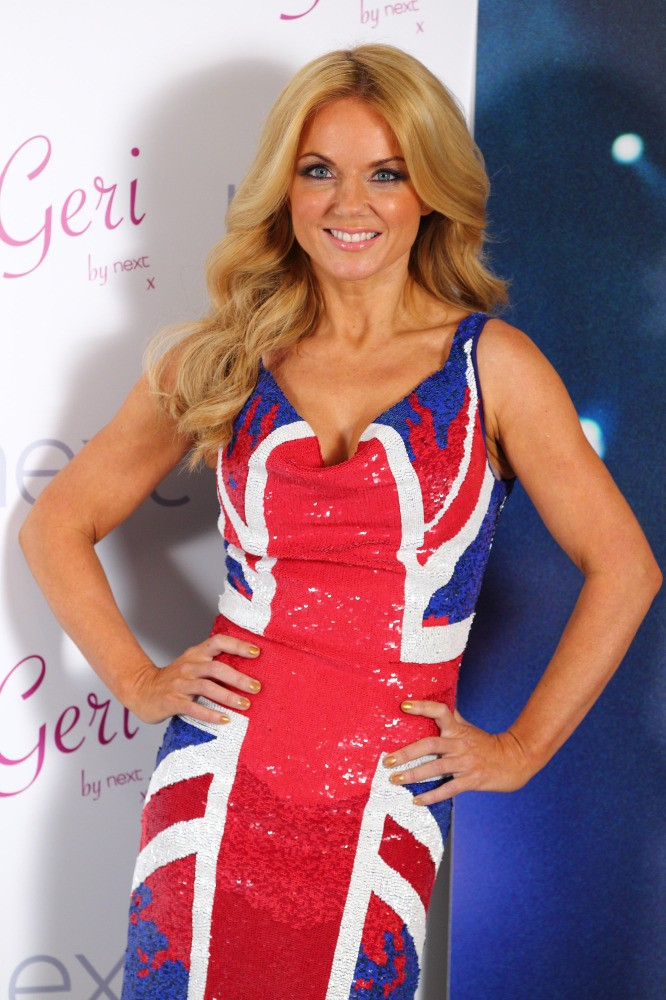
In the following years, that bit of fabric and flag continued to be celebrated and even resurrected. The record-breaking sale only added to its mystique, and fashion pundits began ranking the Union Jack dress among the most iconic outfits ever. (In one 2010 poll, it was voted the UK’s all-time most iconic dress of the past 50 years, beating even Marilyn Monroe’s famous white halterneck .) The Union Jack mini also influenced high fashion – designers riffed on Union Jack motifs, and British high streets sold countless flag-print dresses to wannabe Ginger Spices. Geri herself wasn’t quite done with the concept either. When the Spice Girls reunited in 2007 for a world tour, designer Roberto Cavalli created an updated, sparkly Union Jack dress for Halliwell to wear on stage as a nostalgic nod . In 2019, during another reunion tour, Geri even donned a floor-length gown version of the Union Jack dress, complete with regal crown, as a mature twist on her classic look . Clearly, the power of that design still resonated, even as Ginger Spice evolved into a more grown-up persona.
A Lasting Legacy in Pop Culture
More than two decades later, Geri’s Union Jack dress continues to hold a special place in pop culture memory – a vibrant symbol of an era when British music ruled and Girl Power was the mantra of the moment. The legacy of the dress is seen in endless tributes, retrospectives, and yes, even merchandise. The outfit has been immortalized in wax at Madame Tussauds, recreated on dolls and Halloween costumes, and it even got its own LEGO mini-figure (in 2022, LEGO released a Spice Girls set featuring a tiny Ginger Spice in her Union Jack gear – albeit with a slightly more modest cut than the real thing) . Whenever there’s a list of greatest fashion moments or iconic dresses, Geri’s flag dress is almost guaranteed to appear. It’s become shorthand for the Spice Girls and the late-’90s pop explosion. Not bad for a hacked-up tea towel, right?
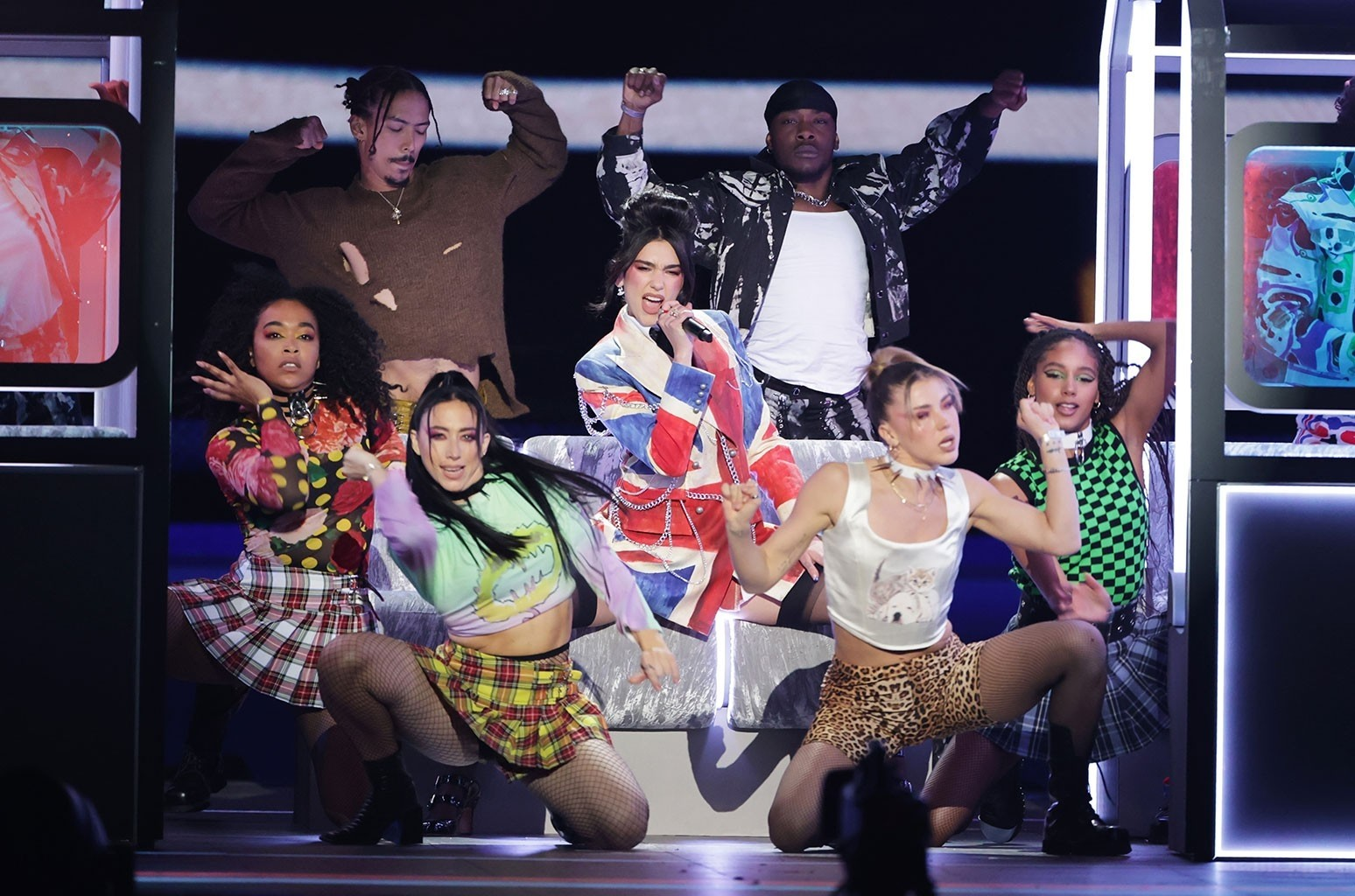
The dress’s message has endured as well. For many who grew up in the ’90s, that image of Geri standing proud in the Union Jack is nostalgic and empowering. Even younger artists continue to draw inspiration from it. At the 2021 BRIT Awards – 24 years after Geri’s famous performance – pop star Dua Lipa rocked a Union Jack mini-skirt during her set, clearly channeling Ginger Spice. Halliwell was thrilled to see it. “Girl Power at the @brits last night… wow, Dua, you wore it well!” Geri gushed on social media, giving her stamp of approval to the homage . She took the opportunity to reflect on what that dress meant to her, encouraging others to be bold like she was back in ’97. “Despite the doubts, I trusted my instincts and wore it anyway. All these years later to see it worn by a fellow sister is so special,” Geri wrote, calling the dress “a reminder to follow your instincts and be yourself.” Her words underline why the Union Jack dress still resonates: it’s a story of confidence and individuality triumphing in front of the whole world.
In the end, Geri Halliwell’s Union Jack dress is far more than a splashy piece of pop star wardrobe – it’s a cultural icon. It captures a unique moment when fashion, music, and national pride converged in the most fun way possible. It remains a defining image of the Cool Britannia era and an emblem of ’90s feminism’s pop incarnation. As long as people remember the Spice Girls and sing along to “Wannabe,” the legend of the Union Jack dress will live on – sparkly, spirited, and forever spicing up our lives. In Geri’s own words from that unforgettable night: “Girl Power!”, indeed.
Sources & References
This retrospective draws on insights and archival content from a range of reputable sources, including:
Additional public and press materials from the late 1990s and 2000s
Vogue — Interview with Geri Halliwell
The Independent — Article by Lauren Bravo
BBC News — Historical coverage of the BRIT Awards
97.9 WRMF (via Instagram) — Visual archive
The BRIT Awards Archives
 Studio DJC